The Harrier
The airframe
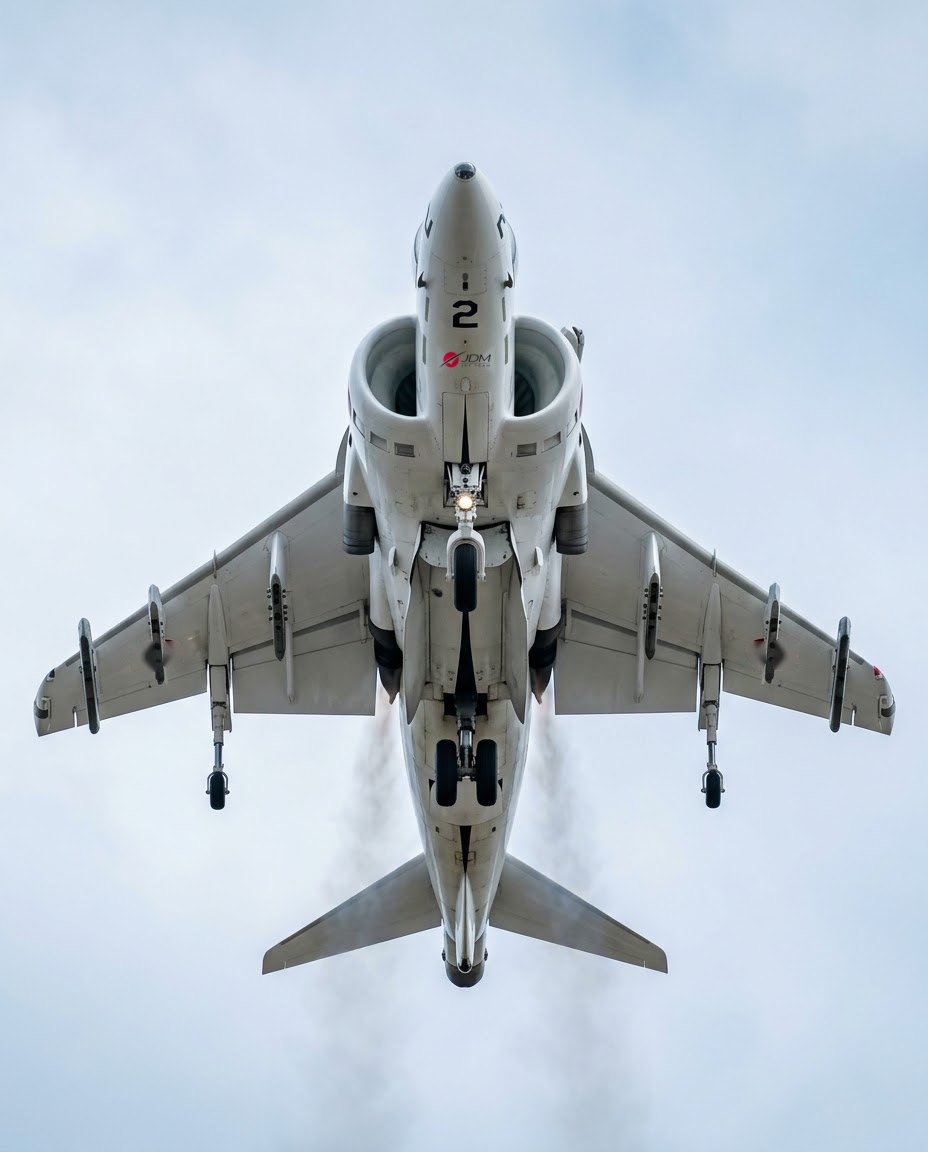
The Harrier has one engine and four nozzles. It is the only jet in the championship that can take off straight up, hover, and stop dead in front of a pursuer.
It was designed to fly without a runway. The Rolls-Royce Pegasus engine pushes its thrust through four nozzles that swing from pointing straight back to pointing straight down. That is how it lifts off a hangar apron, and it is also how it does the thing we care about most: redirecting thrust in forward flight. Pilots call it viffing. The jet brakes hard without changing direction, and anyone sitting on its tail flies straight past.
Both of our Competition Units are Harriers, and so is the registered replacement airframe. League rules say a team keeps the same airframe all season, so that is our fleet. No other team chose it.
Figures
Indicative, for civil-registered ex-service airframes. Competition configuration is confirmed at the pre-season compliance inspection.
| Engine | Rolls-Royce Pegasus vectored-thrust turbofan |
| Thrust | about 23,800 lbf |
| Nozzles | 4, rotating 0° to 98° |
| Length | 14.1 m |
| Wingspan | 9.25 m |
| Maximum speed, low level | about 1,080 km/h |
| Vertical take-off | Yes |
| Hover | Yes |
| Combat system | JWC-supplied, aircraft-agnostic, fitted at inspection |
How it fights
The scoring is simple. A confirmed hit earns a point, and every hit you take costs one. The league's server decides, not a judge. A team can finish a Sunday below zero, and the best way to avoid that is to get hit less. The Harrier gives us more ways to get out of the way than anything else on the grid.
We do not try to outrun a faster jet. We let it close in, and as soon as it commits, the pilot rotates the nozzles. Our speed drops away, the other jet overshoots, and suddenly we are behind it. The gamer takes the shot, and the strategist is already calling the next move.
Against the jets that turn well, the Skyhawks and the Hawks, we take the fight vertical. With thrust vectoring we can point the nose in places they simply cannot. It is a slow jet by the grid's standards. It is also the only one with a brake.
Livery
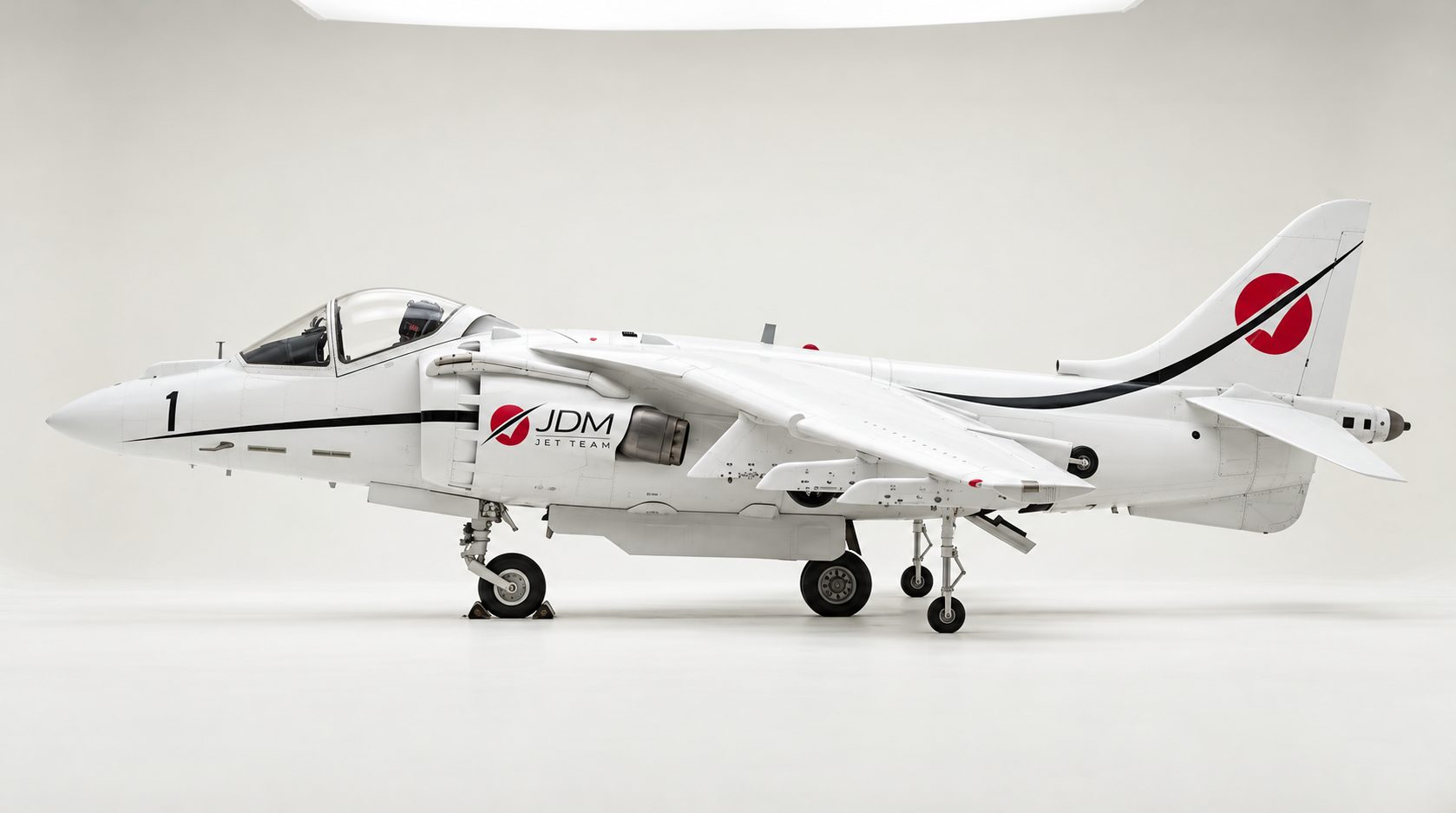
We went white because every other team went dark. The red disc sits on the fin, the black line runs along the fuselage and through the disc, and the race number is on the nose in black. The five numbered spots are the partner positions, explained on the Partners page.
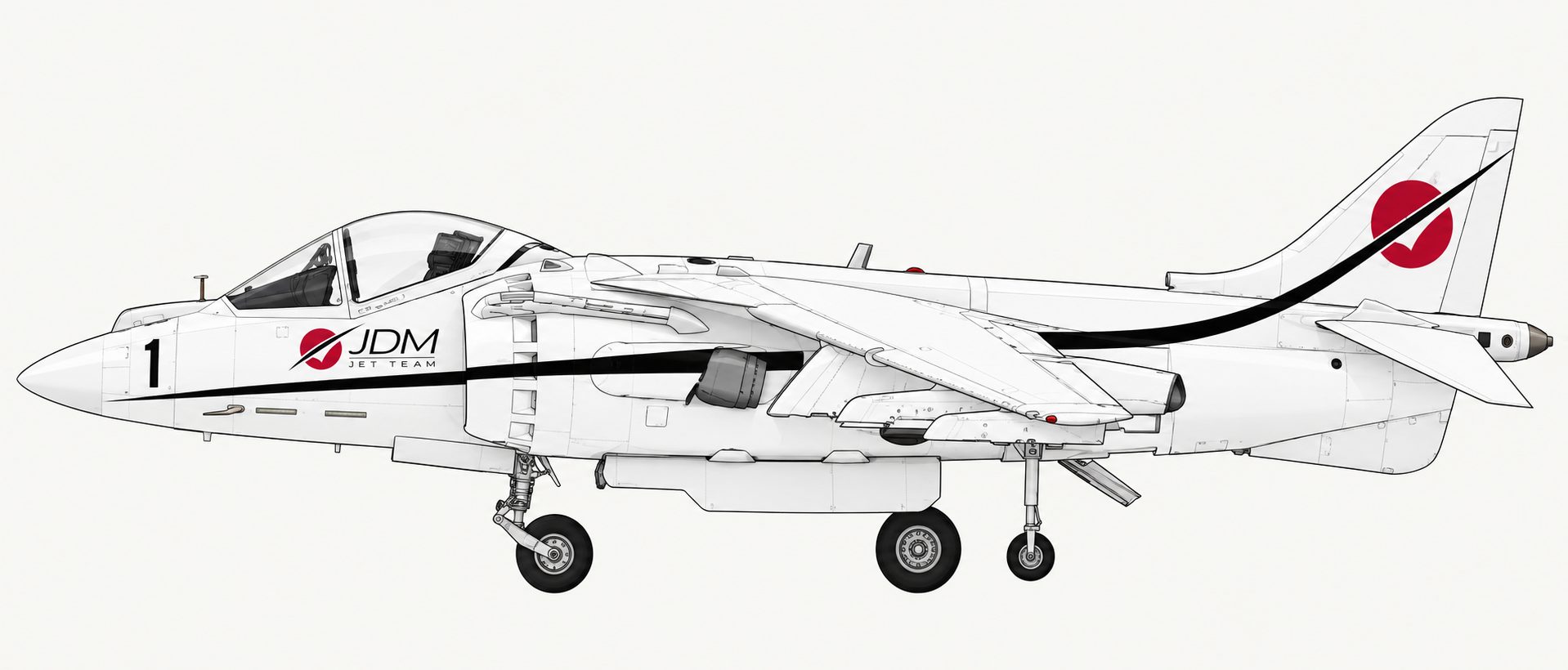 12345
- 1Nose. Title partner.
- 2Forward fuselage, both sides. Primary partners.
- 3Fin, below the disc. Associate partners.
- 4Wing upper surface. Associate partners.
- 5Belly, seen in the hover. Associate partners.